Sprint 1
Exploratory research
I started doing research on the neighborhood, where the playground is located. I used the following research questions:
- How many playgrounds are in the neighborhood?
- How many children live in the particular neighborhood?
- What kind of people live in the neighborhood?
From this I have concluded that there are few people and children from our target group living in this neighborhood. However, there is little competition from other playgrounds or parks in the district.
I then distributed a survey among (grand)parents living in Pijlsweerd/Ondiep. This showed that many (grand) parents discover playgrounds while walking or cycling.
After visiting the playground we understood that few people visited or knew the playground, because the playground was hard to find and did not look very attractive.
To close out the first sprint, we collectively created a set of Guiding Principles based on the discussions with the clients, these read:
- Be simple, accessible to the clients (no difficult tools).
- Not take too much time, the clients have limited time.
- Ensure connection/interaction between the target audience and the playground.
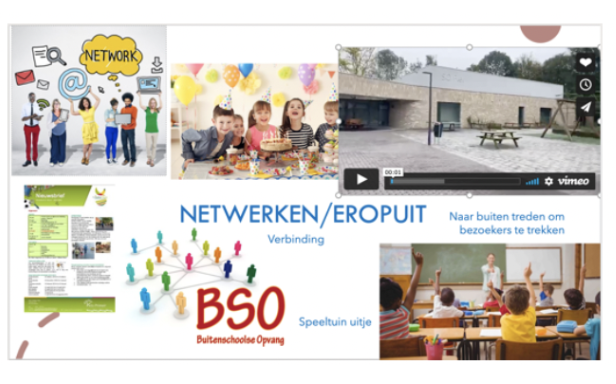
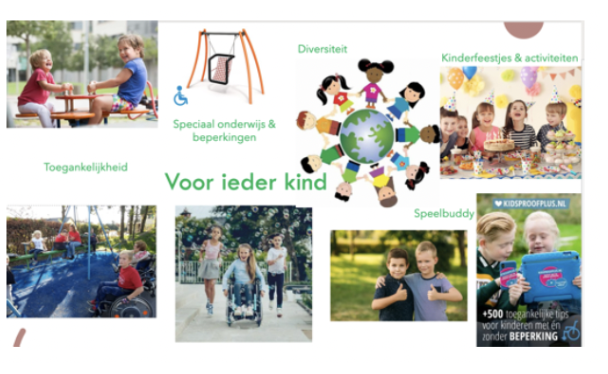
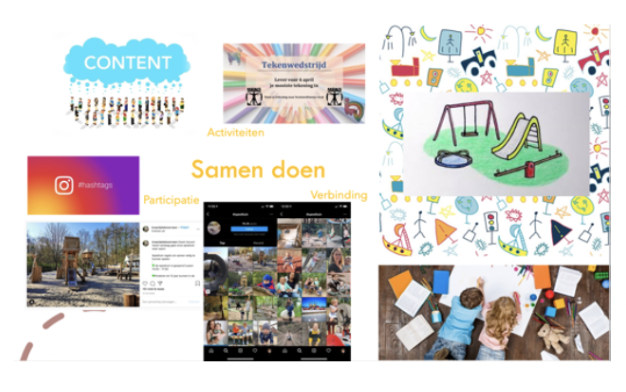
Finally, we also presented three concepts through moodboards (fig. 1), the clients chose the concept 'Networking/outreach', which means we are going to focus on attracting large groups of children (such as elementary schools or out-of-school care).
Sprint 2
Getting to know the target group
In the second sprint I mainly spoke to the target group through interviews. This showed, among other things, once again how important the appearance of the playground is, because the target group once again indicates that they discover playgrounds while walking or cycling. For children, parents find safety, durability and space important. Parents themselves would also like to see activities organized and to have social contact with other parents. After all, if they have young children they have to go with their child to the playground.
The parents who were already familiar with the playground also indicated that they find the communication of the playground very poor.
Based on both the interviews and the survey, Nienke and I created two personas (Fig. 2).
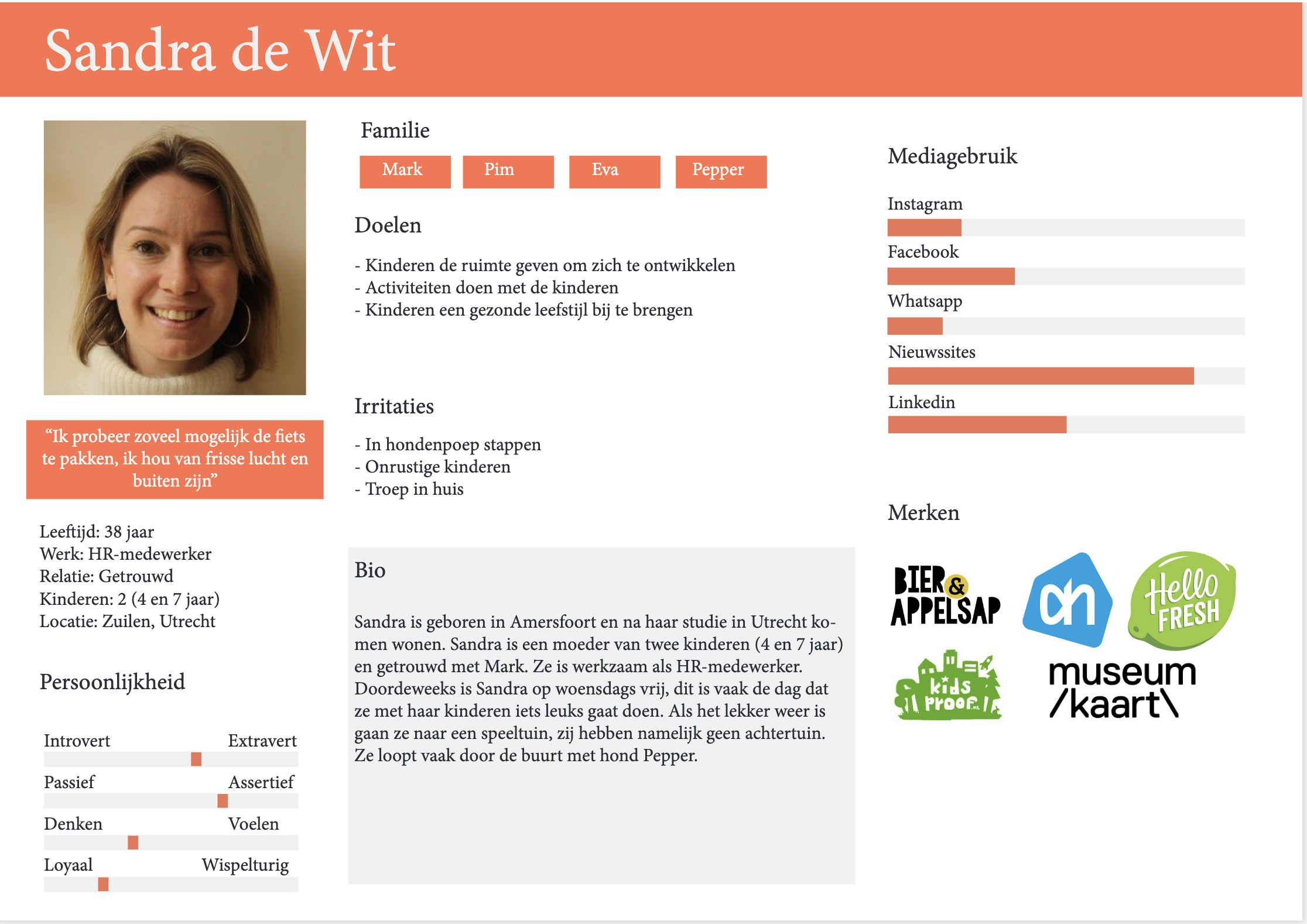
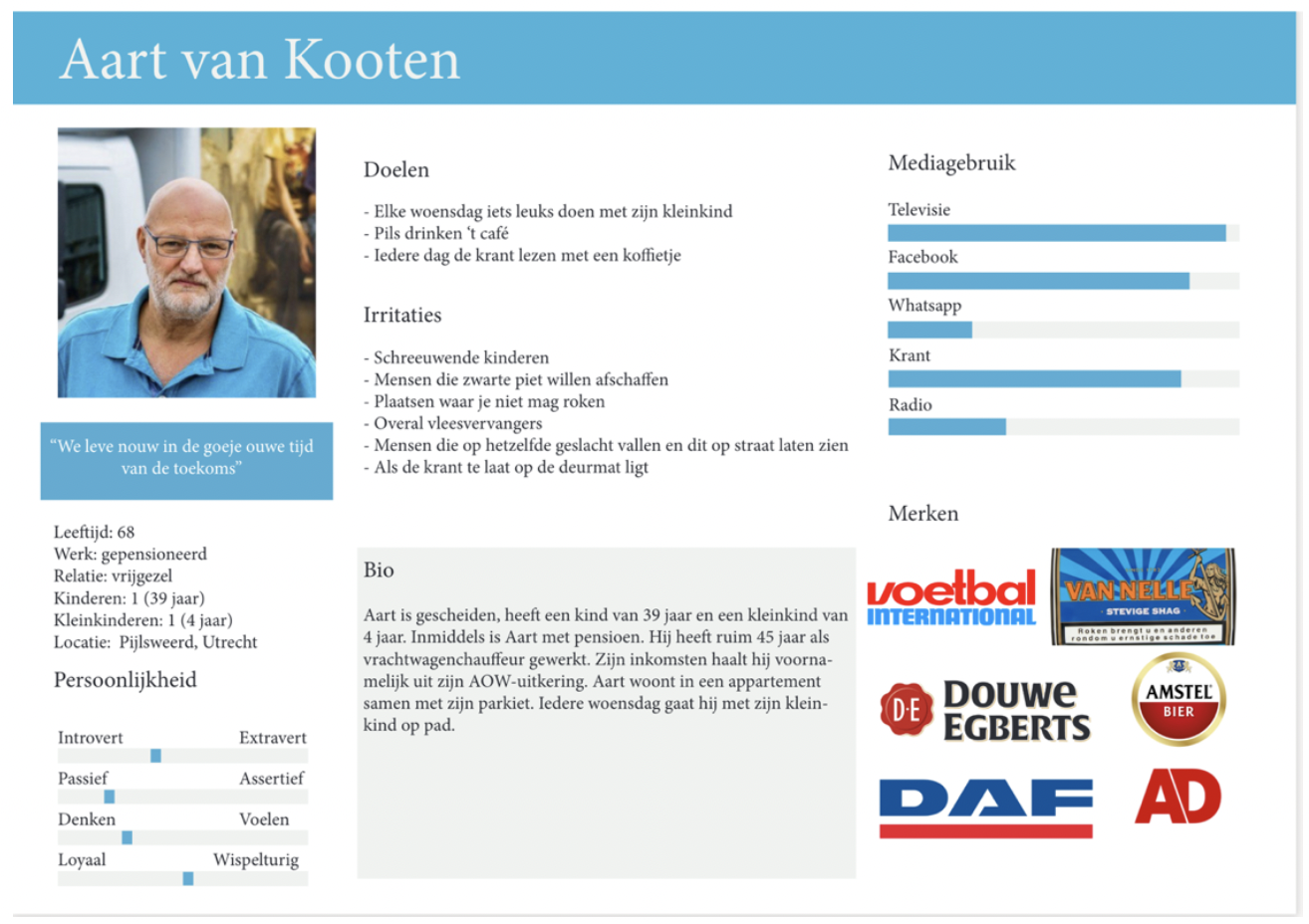
Figure 2: Personas
Sprint 3
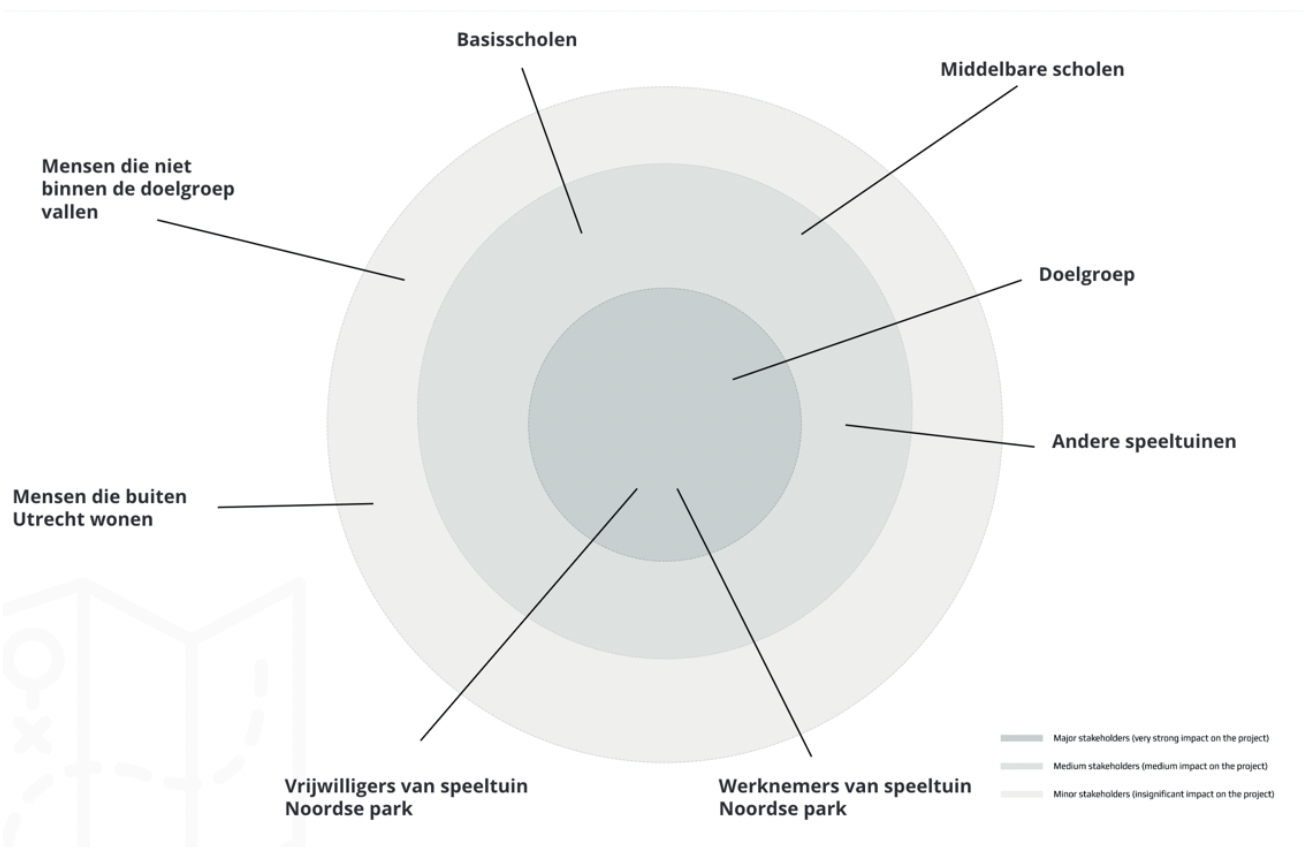
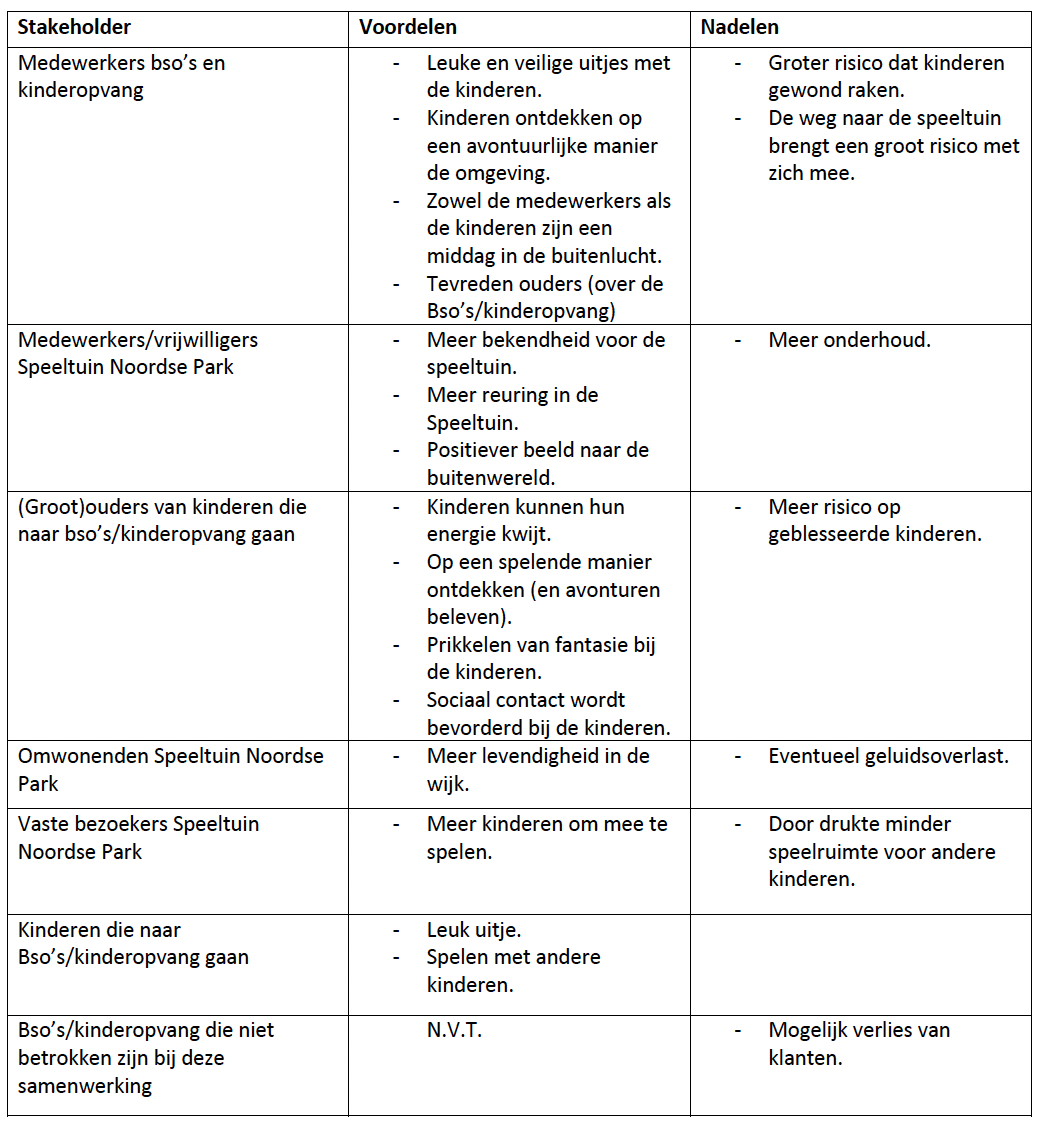
Customer journey and Stakeholders
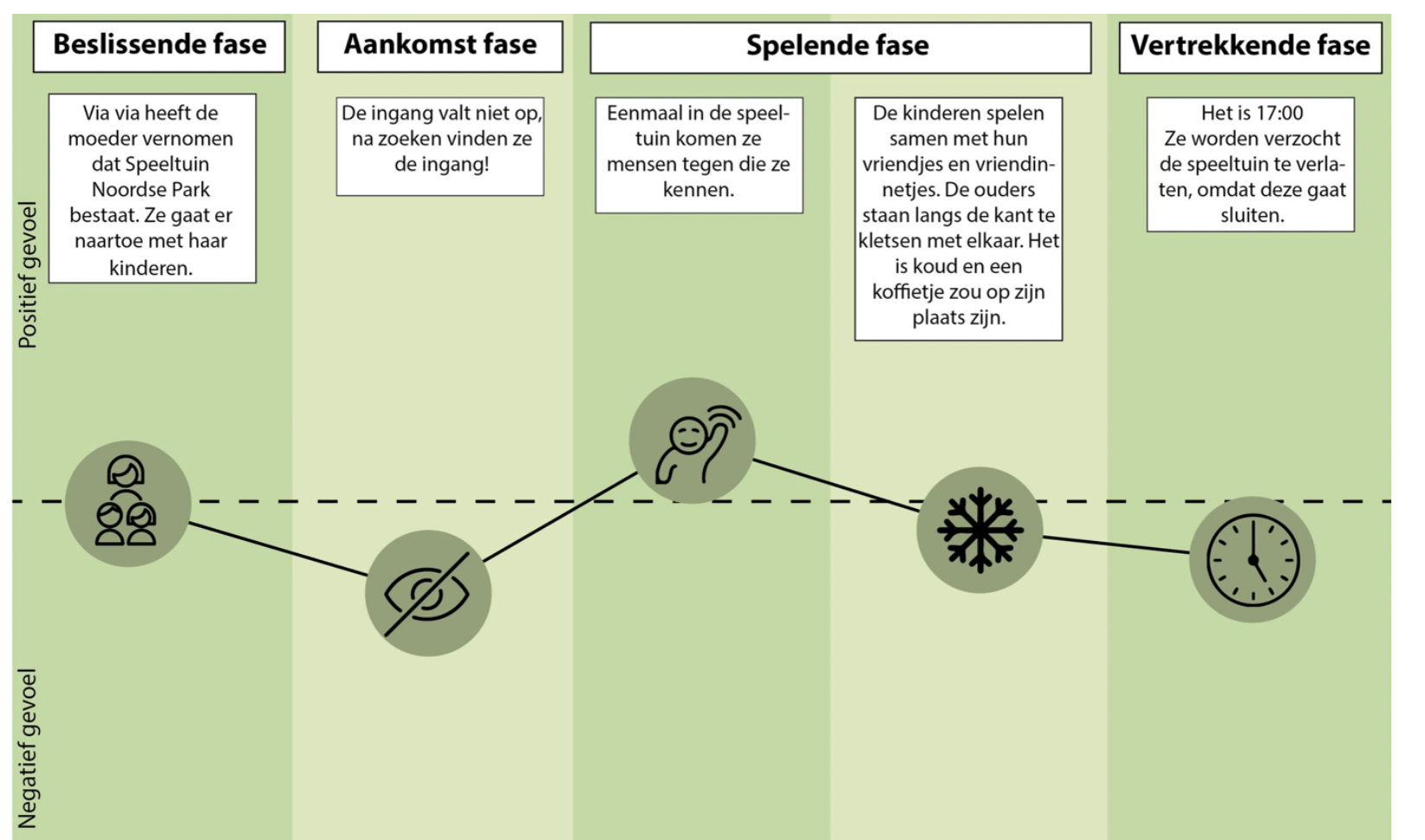
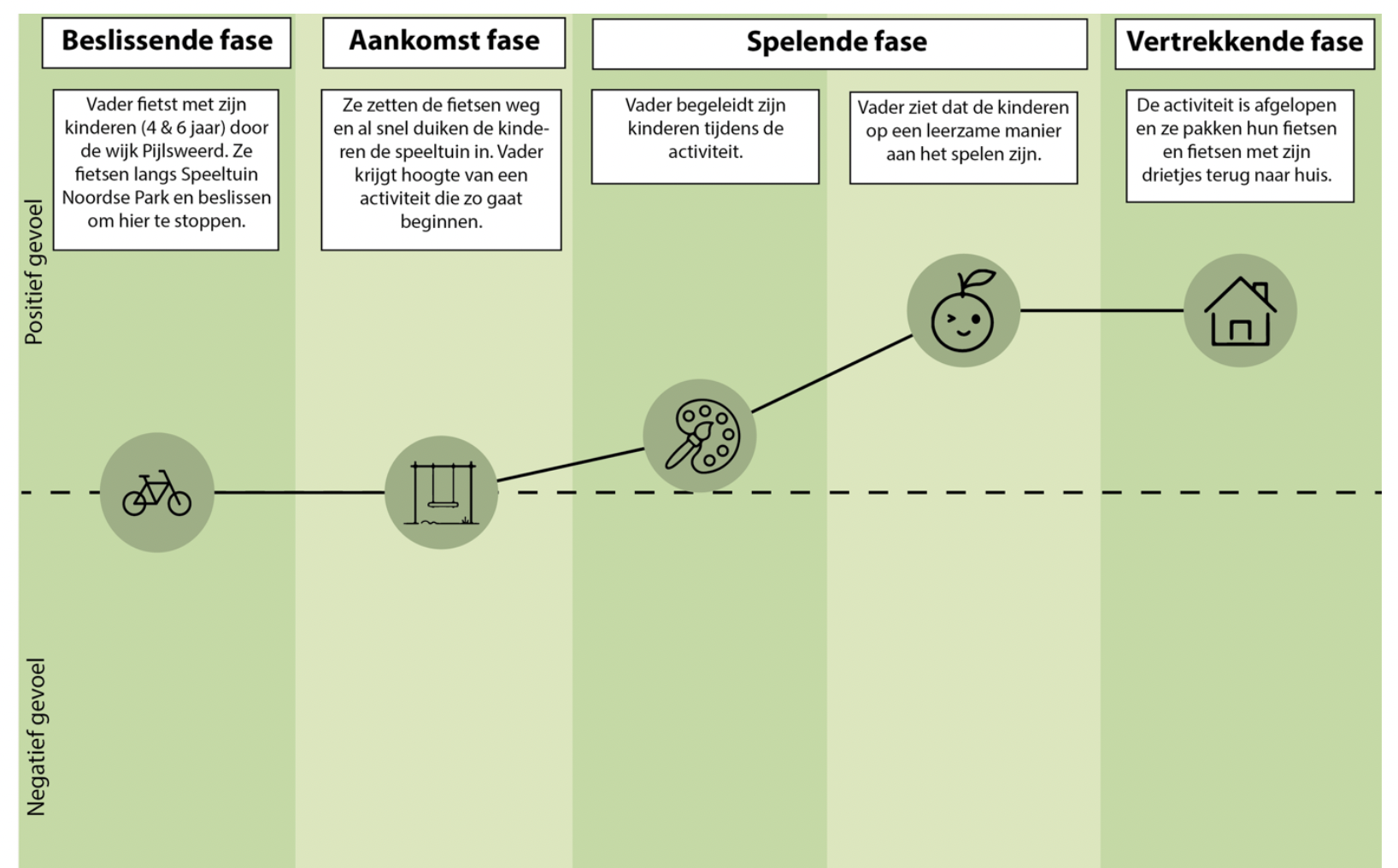
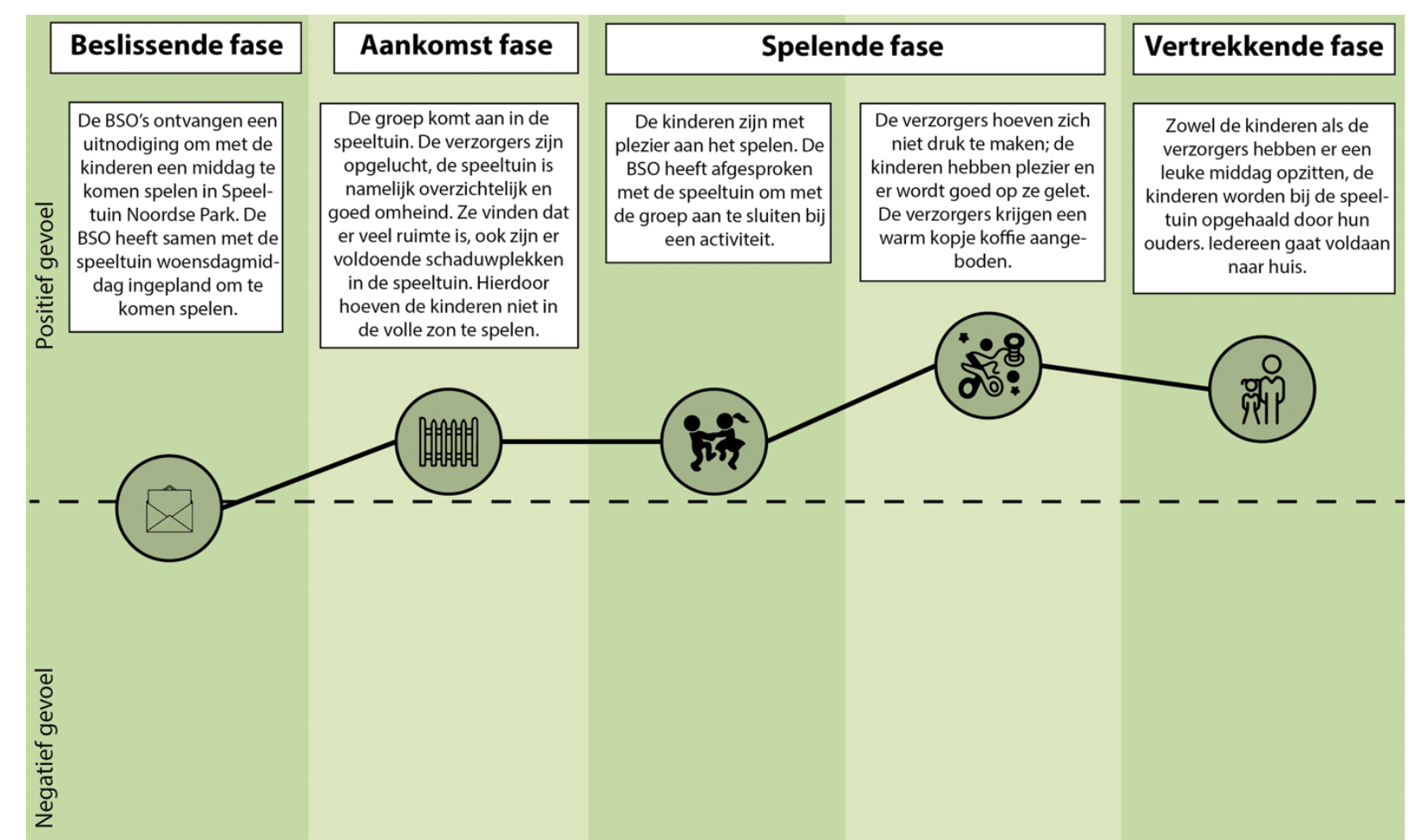
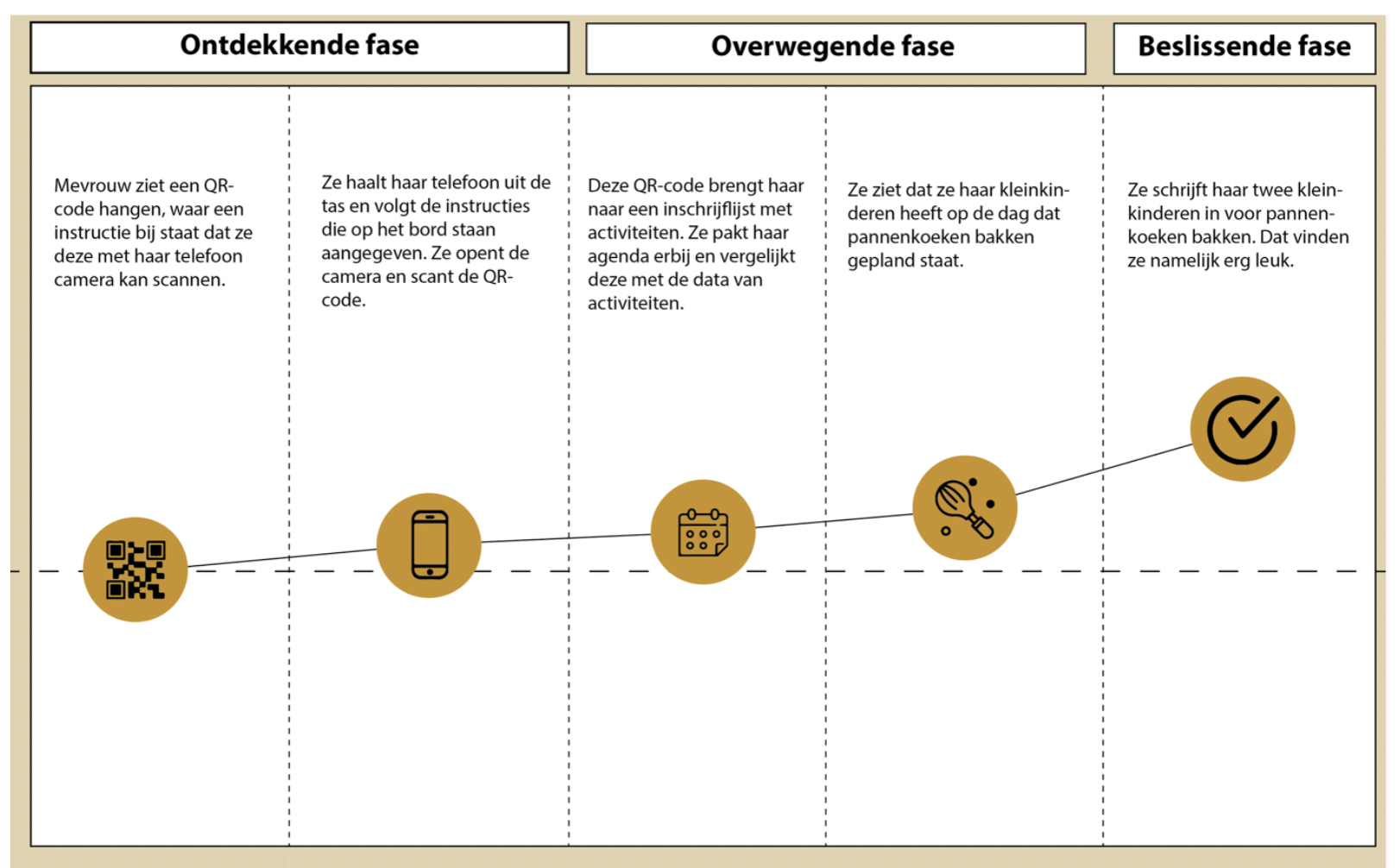
I created experience maps (Fig. 3) in order to visualize the experience of visitors. Two of the experience maps are research based, these are based on the various interviews that were conducted. The fact based map is based on the tests that have been conducted. And finally, the Assumption based map is based on an interview with an employee of an after school program.
Top left and right: Research based maps.
Lower left: Assumption based map.
Bottom right: Fact based map.