COMPLETE

Designer
Project Overview
COMPLETE, a project of the speech therapy lectorate, focuses on the collaboration between parents of young children with developmental disabilities and healthcare professionals. They have aim to improve the self-reliance of people with communicative disabilities. After all, communication is essential for interpersonal contact and participation in society.

In the COMPLETE project, the main focus is on the cooperation between speech therapists and parents of children with a language development disorder (TOS). They want to optimize this cooperation by means of a tool that can be used by speech therapists.
My Contributions
It was up to me to take care of the visuals in this project. Also, of course, outside of my visuals, I had to do my part in tasks of other group members.
To begin with, I, along with my team members, prepared a debriefing. This allowed us to verify that we were formulating the assignment in the same way as the clients.

After drafting the debriefing, we almost immediately established a number of guiding principles based on discussions with the clients and exploratory research, these read:
- Accessible, for both the parent and the speech therapist.
- Playful, we want the tool to be applied in a playful way.
- Recognizable, we want the target group to recognize the tool.

Based on these guiding principles we have also come up with three concepts (fig. 1), namely:
- 'Plaatjesmaker': cooperation between speech therapists, parent and child by means of illustrations and accessible assignments or games. The emphasis here is on the visual aspect.
- 'Wegwijzer': making the parent an expert in the field of TOS and their child. The emphasis here is on informing the parent as much as possible.
- 'Samen op de brug': letting them know that speech therapist and parents / children are equal and that they have the same wishes. The emphasis here is on talking to each other. Goals are set and there will be an evaluation in between.
Sprint 1
Figure 1: The three concepts.

Top left: 'Plaatjesmaker', top right: 'Wegwijzer' and bottom left: 'Samen op de brug'.
To start the second sprint right, I started by interviewing four experts, namely healthcare professionals. Here we looked at how they currently communicate with their clients and where their needs lie in a possible future tool.

From these expert interviews, the following findings were made:
- A tool in which there will be information for the parents and in which they can ask questions to the professionals themselves.
- A physical tool with information for parents, the communication is less easy when this happens digitally.
- The role of the parents is very important for the progress of the child.
- Transparency within the communication is very important for the cooperation with parents.
- Homework is now often written down in a notebook so that parents are aware of their child's homework.
- Low-educated parents often have difficulty supporting their child.
- It is very important if parents are well informed and can look from the perspective of the speech therapist, so the concept 'Ouder als expert' / 'Samen op de brug'  works best.

As a result of these expert interviews we have adjusted our guiding principles from sprint 1:
- Not time-consuming, speech therapists are paid per treatment and therefore have little time left to do more (unpaid) work.
- Transparency, transparency is very important for the collaboration with parents.
- Low-threshold, so that both children and (low-educated) parents can participate.
- Inviting, so that homework and tasks are picked up by the children or parents.

We then held a brainstorming session as a team to generate new ideas. The results of this session we immediately presented to care professionals and the following findings were made:
- We will from this moment onwards continue with the concept 'Ouder als expert' (formerly the concept 'Samen op de brug').
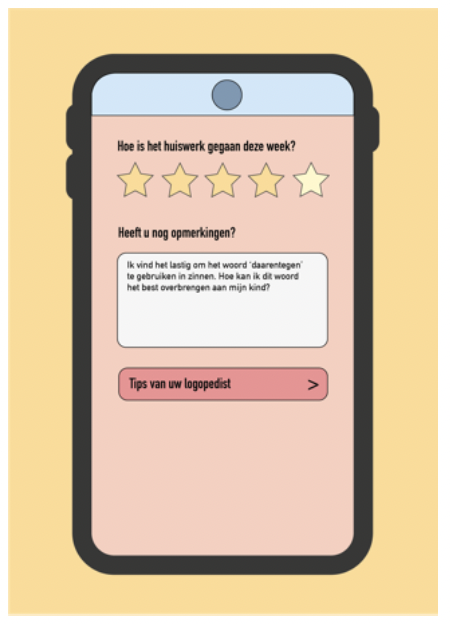
- In the future tool there must be a 'diary function', in which parents with their child can give feedback to the speech therapist how, for example, homework went.
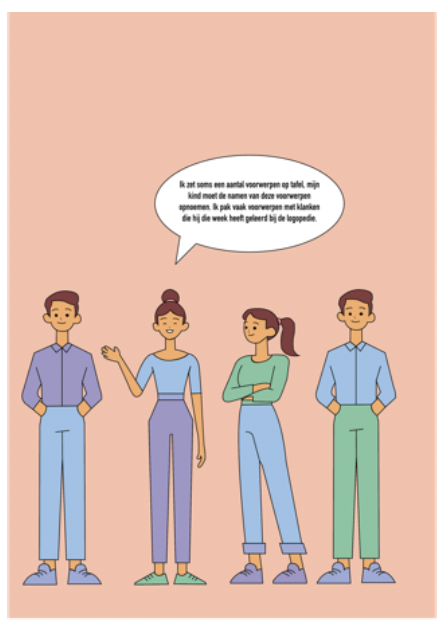
- Organizing group meetings for parents who have one or more children with TOS.
- The information transfer should be given to the parents in an attractive way. Also, all information should be given in a way that parents do not have to search (long) for it.

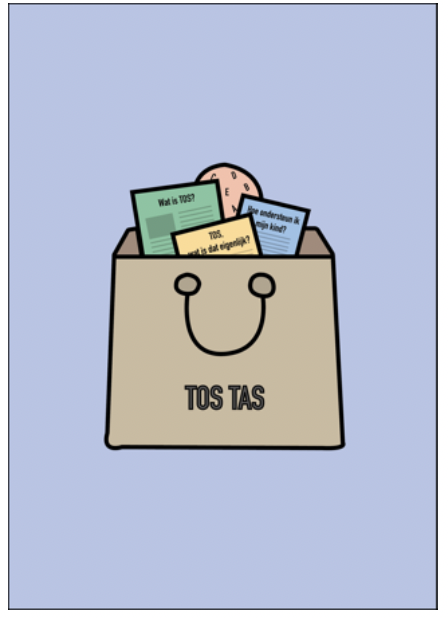
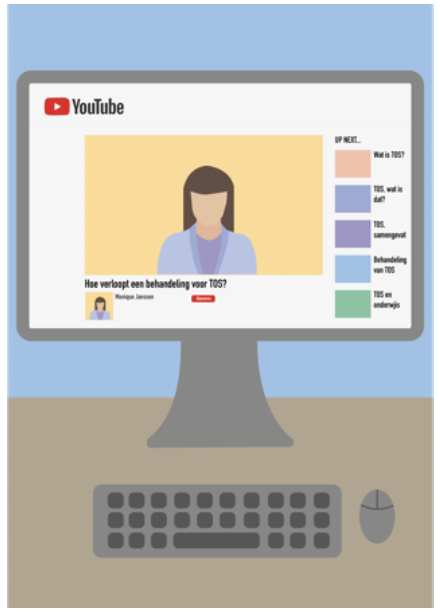
In figure 2 you can see four prototypes that I designed. On the top left you see the diary function, on the top right you see the group meetings, on the bottom left you see the 'TOS TAS' (a bag filled with information about TOS) and on the bottom right you see a YouTube channel in which information about TOS can be conveyed to parents through videos.
Sprint 2
Figure 2: 4 Prototypes
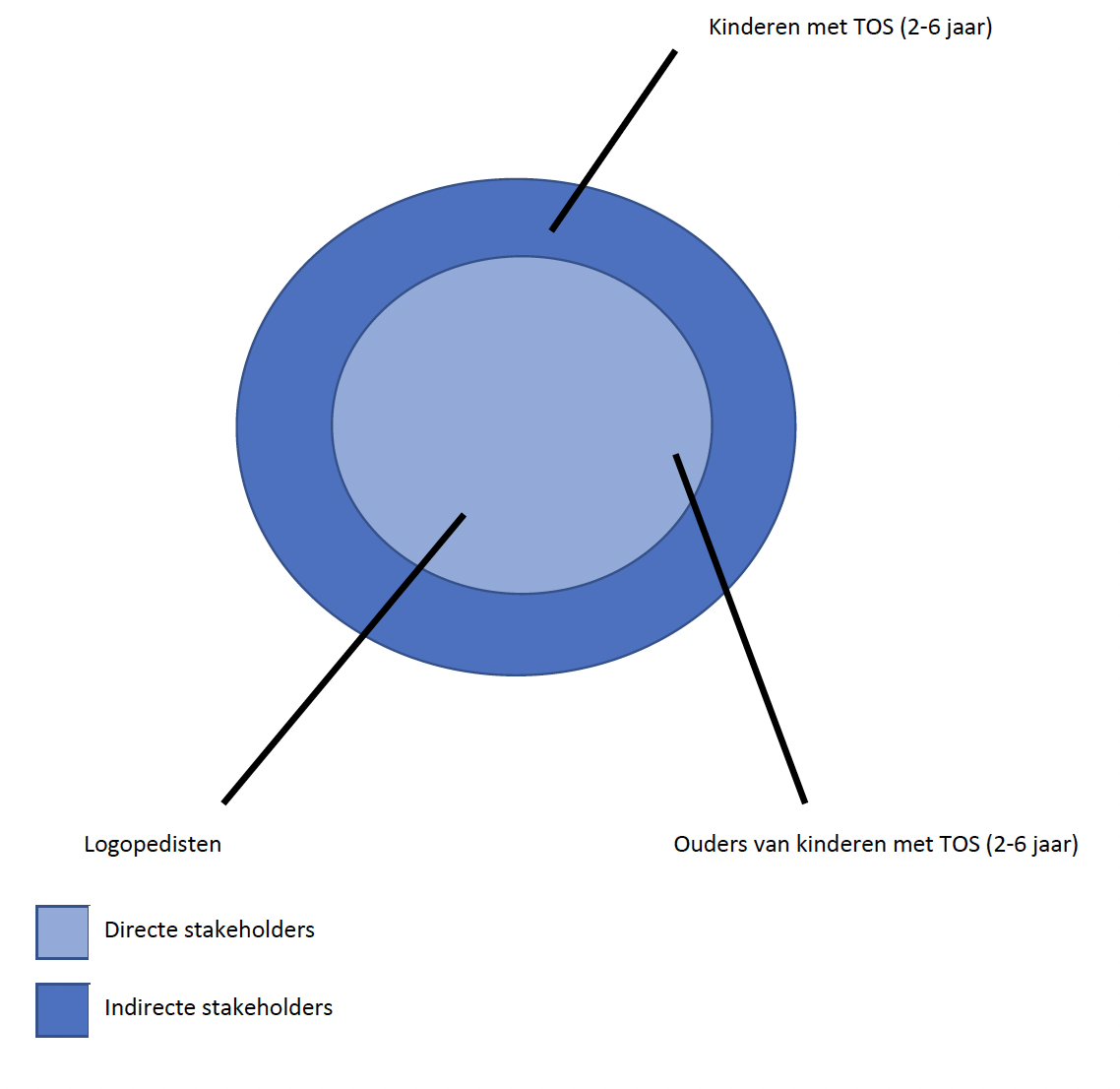
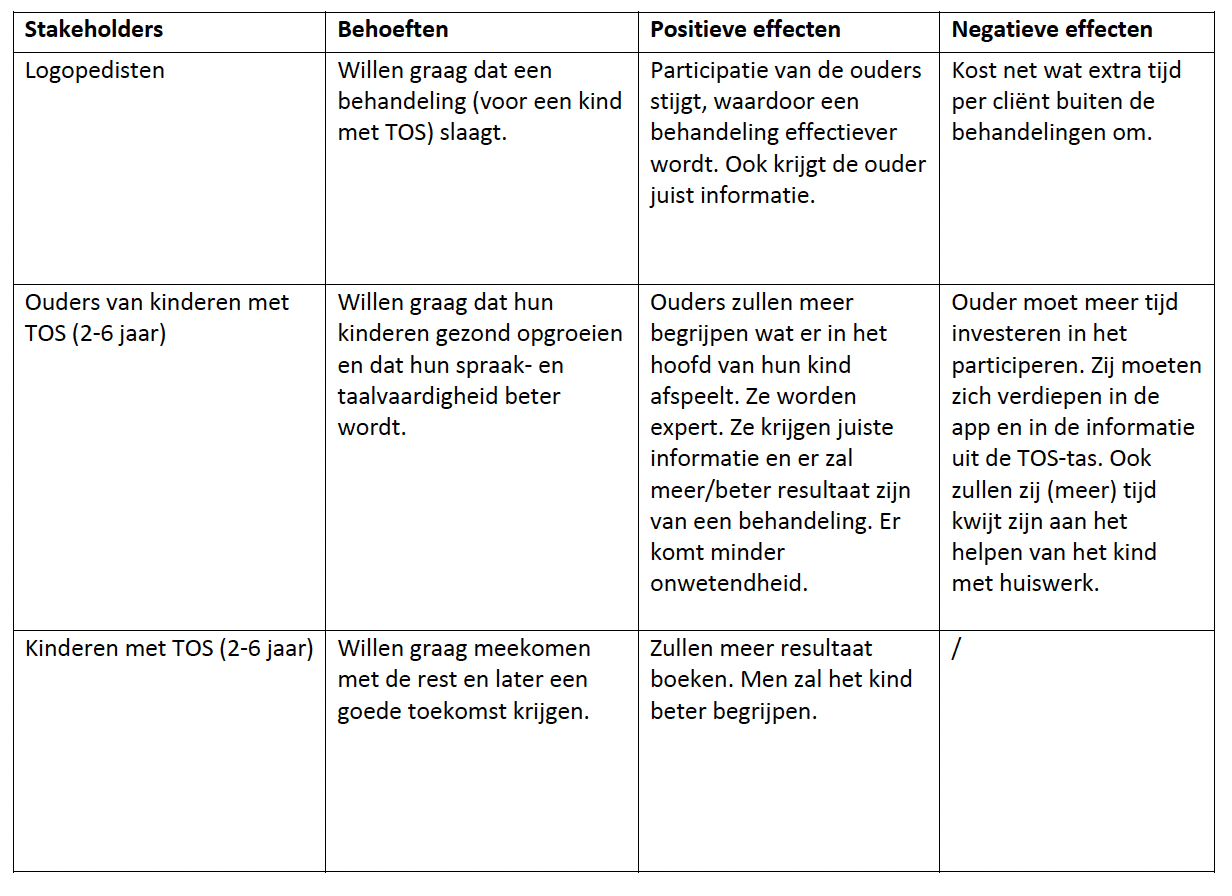
Sprint 3 we kicked off by creating a stakeholder map and a stakeholder analysis (Fig. 3).
Sprint 3
Figure 3: Stakeholder map and stakeholder analysis
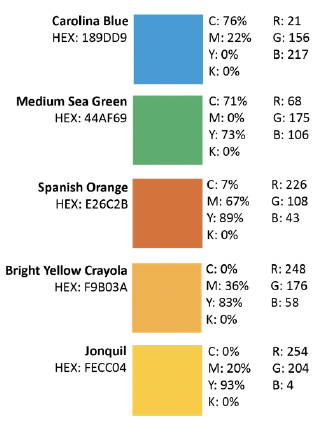
After creating the stakeholder map and stakeholder analysis, I created an inspiration wall with colors we would like to use for visuals in the future. I took different expressions from other children's agencies and merged them into one color palette (Fig. 4).

I also did some brief color research, for example I looked at what the meaning is of certain colors.
Figure 4: Color palette.
Now that I had created a color palette, I could get to work creating prototypes for our concept. I personally fully developed the app 'TIPS & TOS', this interactive prototype can be seen by clicking on the link below:TIPS & TOS
After creating this prototype, I tested the app with several parents who fit within the target audience. The app was also tested with a speech therapist. I will list the important findings from this below:
- There is a lot of need for the feedback option that the app now provides.
- There is a need for the app, but parents would also like to have something tangible.
- Parents like that the homework can now be found in the app.
- The videos are nice to watch together with your child.
- The progress function is also very popular, parents would like to see a reward system.
- The colors are cheerful and not too present.
- The homework assignments in the app correspond well with homework assignments the parents have been given for their child.

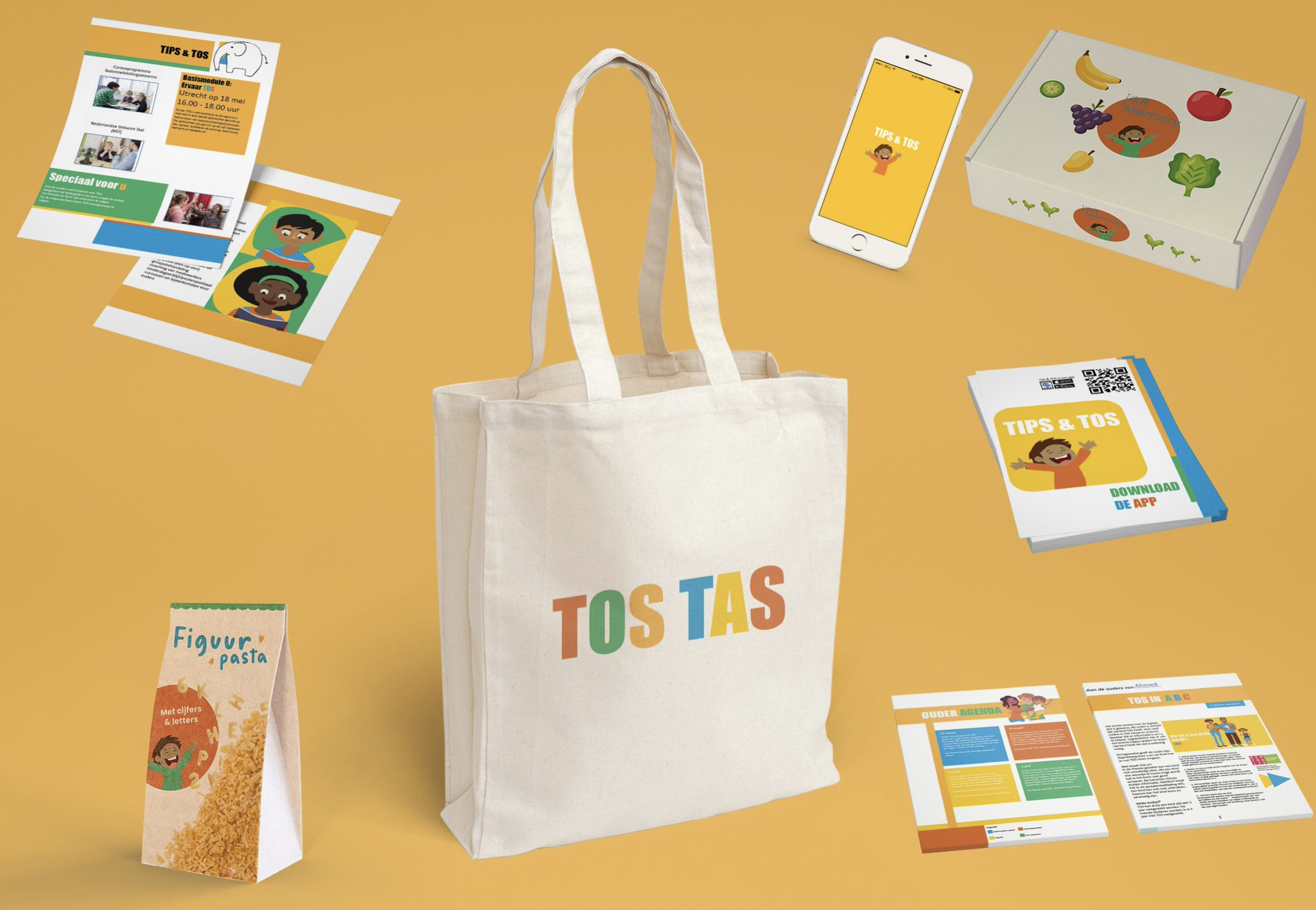
To address the second feedback point, Nienke Vos elaborated on the concept of 'TOS TAS' in another visual way (Fig. 5). Together as a team we have developed this concept a bit more broadly. We added some more physical elements next to the TOS TAS, you can also see these in Figure 5.

Figure 5: TOS TAS

This project was in collaboration with Nienke Vos, Ofra Broers and Dominique Nash.